Earl September

My photo
I write what ever comes to mind. Real is me and my views/opinion. Be Yourself, be REAL Open-minded young South African who loves to follow South African politics and social issues. I try not to limit myself as I'm capable of more than where I'm now.
Showing posts with label Metrofail. Show all posts

Saturday, 16 June 2018

Trains delayed due to upgrade


Train buddies should brace themselves for a lot of delays still – until the entire rail network has been upgraded.

In August 2017 Metrorail admitted to the Western Cape Provincial Parliament overcrowded, delayed trains is going to be with us for some time still.

“Experience has shown the inadvertent impact of migration to new technologies to have sporadic service failures,” explains Riana Scott, spokesperson for Metrorail.
This all is apparently part of the commissioning and testing new technology.

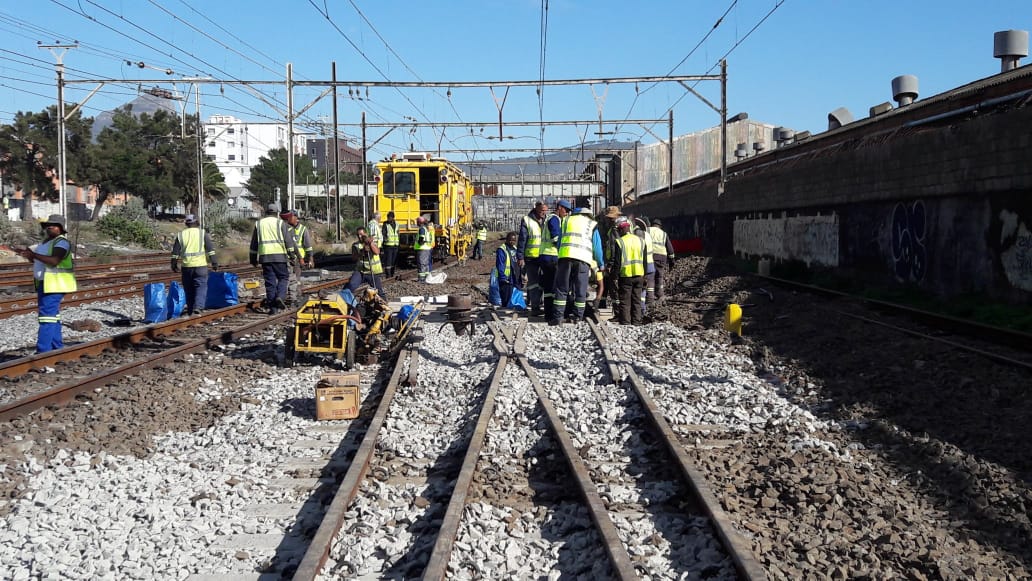
The Passenger Rail Agency of South Africa (Prasa) started months ago to replace the old systems with new electronic systems.
Work started on the Southern or suburban line, while work on the Monte Vista line is done by Transnet.
“The project is implemented in phases, with the southern line about 65% complete,” says Scott.

In October 2017 former transport minister, Joe Maswanganyi, announced that R9-billion is made available for the upgrade of the rail network in the Western Cape.
He also mentioned the first project which is the re-signalling project, that at the time was in its third year, is a five-year project at a cost of R2-billion.
Scott was asked what the estimated cost per phase and line is. She however only responded: “the re-signalling in the Cape Region is estimated at R1.2-billion.”

It also appears as if Metrorail have no idea why their trains are late.
Since the start of the project there has been a significant increase in not only delays but also the time you wait on a train and wait in a train between stations.

According to Scott signal- and/or power failures can be attributed to a range of causes and not only because of the current re-signalling work.
“It can be from tampering with fibre-optic to problems with migration of technology. Where migration is incomplete, a fail-safe handover is done from ‘old’ grid to ‘new’ system. This is like manual authorisation, where there is no automated signalling.
“With migration of new technology, it also happens that the electronic notice boards are not aligned to real-time movement of trains and don’t reflect the correct information. This is currently the case with the electronic boards on Cape Town station.”

Metrorail was asked when re-signalling work would commence on the other lines, with the understanding Northern Line is next. The rail operator was also how many train stations have functional announcement systems and how many have loud-hailers. After 4 days, Metrorail still failed to provide such a list or make one public.
Scott did respond per email that she was in a workshop on Tuesday and would respond by Wednesday. At the publishing of this there has still been no response.

It’s understood the workshop Scott is referring to was in fact a two-hour meeting with a civil organisation regarding safety on the central line.
A source who attended the meeting says: “there was a presentation and a lot of answers, but no progress.”


This was originally published in Afrikaans in Son Koerant on Friday 15 June 2018. Click here for link: Diens lol oor werk 

Monday, 12 March 2018

No, Prasa, you not the victim


“Prasa can only lie and should stop playing the victim”
These are the two things stuck in my head after a recent meeting of the parliamentary portfolio committee on transport.

On the agenda was the Passenger Rail Agency of South Africa, briefing members of parliament on the current challenges commuters face daily and safety aspects.

Halfway through the meeting and the chairperson gets up, turn her back to the meeting where I’m seated and says: “Prasa is lying”.
And then Dikeledi Magadzi, MP, walked out because neither she nor any of her colleagues are getting any answers to their questions.
Upon her return, just before the end of the meeting, Magadzi said “Prasa don’t listen. "They get 48 hours to report come back after 14 days with the same plans that says nothing.”

Prasa had nice big words, but that did not impress MPs.
I am still not sure if I am shocked or disappointed in Prasa’s presentation.
They considering mini-operational centres at stations, to improve communication to commuters.
Some of the other plans is to keep commuters informed with SMS notifications and use social media more effectively.

As a commuter myself it was traumatizing to sit and listen to the presentation.
I’m not sure on what delayed train that presentation came, but Prasa clearly has no idea what is happening around them.

I’ve been a commuter since my varsity days and back then already we received SMS notifications. Announcements at stations probably came with the stations. And social media, well this has been used for nearly five years now. BTW: I was the first person to use the hashtag #TrainReport in 2013.

Prasa did admit people are suffering, arrive late and are given warnings at work and this because Metrorail cannot deliver the service thousands of commuters deserve.
Now if you know this, what are you doing to change it?

One of the big guns mentioned about some law or policy. To be honest he lost me, because I prepared myself to hear about this or that plan.
Luckily one of the MPs came to my rescue when he stopped the Prasa-manager and said: “We not here for a workshop, go give it to Prasa employees. We want answers and plans that will ensure a safe and reliable train trip for commuters”.

Prasa should be ashamed at their presentation, where they play the victim.
With unemployment in the Western Cape at 19.5% people are literally clinging to their job. But Metrorail is sabotaging everyone’s job security.
Employers also don’t believe the excuses that trains are late every day.
In January Prasa blamed an increase in crime, lack of investment in passenger rail transport and the cost of modernisation.

Two Prasa board members then admitted things look impossible and there is no alternative plans to assist commuters.
The worst is probably that Prasa officials don’t even sit with a “we apologise for the inconvenience” expression.

Original piece appeared in Son of Friday March 9th 2018: Read Here

Sunday, 21 January 2018

Metrorail: It's a crisis, but there is a plan

Damages to the rail infrastructure is what we can see but what about the damages to people’s lives who are unable to get to work or home.
These the words of Western Cape Transport Minister Donald Grant, who says commuters should be the number one priority.
Prasa Acting Group CEO, Cromet Molepo, during a media tour to Metrorail’s notorious Central Line says there is a plan…
The tour comes hours after a test train derailed, shortly before the line would have been reopened after it was closed for more than a week. The closure was due to a labour dispute, following the fatal shooting of an armed security guard and destruction of two substations, that are needed to ensure trains can move.

For years little investment took place in passenger rail, and from the little that was invested some went to the wrong pockets.
Current management inherited a system falling apart and as if that was not enough to deal with, crime and gang related activities in various communities have started to not only affect but spill over onto the tracks.
On 12 January I wrote in an article trains are a national crisis. Prasa for the first time in a statement admitted “national intervention is needed”. A few days later ANC member of the WCPP Standing Committee on Transport, Cameron Dugmore, also said “we should consider the situation a national crisis”.

In another article on 17 January I mention the train system can come to a halt in the province. Vandalism and cable theft already started to spread to other lines, and if nothing is done there will be no movement on any of the lines.
Nana Zenani, spokesperson for Prasa, says if we don’t learn from Bonteheuwel and Khayelitsha the system can collapse.
“It is not only cable theft taking place but vandalism of infrastructure and staff and commuters that are robbed and whose lives are in danger.”
During the Central line media tour, deputy director-general for rail at the department of transport, Mathabatha Mokoena, stop short of saying passenger rail is a national crisis. Instead he admitted passenger rail is in a critical state. According to him DoT is committed to preventing trains coming to a standstill and if needs be budget adjustments will be done and even additional funding be asked from Treasury.

Cosatu in the Western Cape have also express their concern for the safety of commuters. “Everyone should be working together to ensure a safe rail environment,” says Tony Ehrenreich, provincial secretary.
Head of SAPS railway police, Maj.-gen. Michael Mohlala, says they will be working more closely with Metrorail to clampdown on cable thieves.
Mohlala said that in future, cable theft crime scenes will be completely sealed off by forensics officers, fingerprints will be taken and compared with metals sold to scrap metal dealers.
Previously, the crime scenes had been walked over by the repairmen and no clues were left.
When asked about deployment of officers on trains, especially during peak, Mohlala said he already requested that deployment of officers be done in accordance to the needs of the rail operator.

Most notably absent was not only City of Cape Town Mayco Member for Transport, Brett Herron, but also ward councillors in the affected area.
When asked about ward councillors who are the first contact with communities, not being invited, Prasa GCEO said he was not part of organizing committee but asked that all stakeholders be invited.
MEC Grant in his speech made mention of including the city. “We all need to work together and pull in the same direction.”
Chairwoman of the Cape Business Chamber, Janine Myburgh, was present. Prasa appealed to her for the chamber to engage their members, considering the state of the railway service, not to dismiss employees for late arrival because of train delays

When asked if he’s satisfied with and the level of communication to commuters, Molepo before I could complete my question said: “No, I can never be. Not if I look at the amount of complaints”.
There seems to be no clear deadlines for what is planned, nor is Prasa giving more detailsMolepo’s response is: “we cannot reveal the details of our plan. Criminals are clever, they watch TV, listen to radio and read”.

Also read:
Pyne oor die lyne
* Keer 'n ramp

Wednesday, 8 November 2017

Spore het hoop, maar bied nie kitsoplossings

Dit is nou al amper 40 minute en daar was nog nie eens ’n aankondiging nie. Die treine is al weer laat. Dit raak nou ’n gewoonte – treine is meer laat as wat dit betyds is. Kommunikasie is ook nie een van Metrorail se sterk punte nie, want glo dit of nie – met al die treinkansellasies is daar nog meer treine as aankondigings.

Op die platform wonder ek wanneer kom die verdomde trein, want ek het klaar ’n kaartjie gekoop. Ja, dit is hoe duisende pendelaars baie keer voel en dit is iets wat duisende daagliks in die gesig staar.
Ek raak nou moeg van die gewag en ek weet nie of daar iets gaan kom of nie. Wag, laat ek iemand bel.

Die daaglikse stryd en frustrasies van pendelaars is weens wanbestuur en korrupsie, maar ook swak of eintlik geen beplanning.
Die huidige diens kan jou nie ’n trein wat betyds is verseker nie. Jy is wel verseker van ’n oorvol trein, en nadat jy gesukkel het om in te klim moet jy oor die uitklim begin worry.
Vir dié wat nie treinry nie – dit is iets soos stoei se royal rumble.

Treine op die Wellingtonlyn is met meer as 60 minute laat. Die probleem is glo ‘low overhead power’ tussen Huguenot en Soetendal. Ek is ook herinner daaraan die die spoorlyn tussen Stikland en Wellington en verder aan Transnet behoort.
Dis die ander probleem. Metrorail huur slegs die gebruik van die lyn, maar enige herstelwerk en onderhoud is die verantwoordelik van Transnet.
Net onlangs was daar ’n passasierverwante voorval by Brackenfell. Wellington treine moes via Stellenbosch ry, en dié tussen Kraaifontein en Stikland is aan hul eie genade oorgelaat. Dit was nou totdat ’n kontrole-operateur van Transnet op die toneel gekom het om enkellynwerk te begin. Dis maar net die operateur wat self elke trein van ’n sekere punt tot by die volgende neem.

Ek dink nou – ironies genoeg het ek vroeër vanjaar aan Metrorail se streekbestuur genoem dat hulle meer aandag aan die “vergete” lyn sal moet gee en selfs voorgestel dat ’n senior bestuurder die verantwoordelikheid vir kliëntediens op die lyn gegee word.
Sien, Metrorail het een areabestuurder wat verantwoordelik is vir die sewe stasies tussen Wellington en Muldersvlei. Die aankondigingstelsel en/of luidsprekers by talle van die stasies werk nie, of dié waar dit nie werk nie het nie draagbare luidsprekers nie of daar is nie ’n personeellid om sy of haar lewe te waag en aankondigings op die platform te doen nie.

Wat my dikwels grensloos irriteer is “make use of bridging transport” – net mooier bewoording vir “kry alternatiewe vervoer”.
Dit het my een oggend só op die spore gedryf dat ek Metrorail se kommunikasiebestuurder moes WhatsApp en vra kan hulle nie eerder sê “regrettably Metrorail has no buses available and commuters are advised to arrange their own transport”.
Hoe ironies dat ek dit nou juis in vervoermaand moet noem, want nie net word baie min tot geen aandag aan veral openbare vervoerdienste in landelike gebiede gegee nie, maar baie van die landelike gebiede het geen openbare vervoerdiens nie behalwe vir taxi’s wat jy dalk net tot 18:00, of as jy gelukkig is 19:00, gaan kry.

Kort voor sy aanstelling het die minister van vervoer, Joe Maswanganyi, in ’n parlementêre portefeuljekomitee sy kommer uitgespreek dat Metrorail so baie huurgeld aan Transnet betaal.
Met sy besoek vroeër die maand aan die Kaapstad-stasie saam met Prasa se groepbestuurshoof, Lindikhaya Zide, moes ek net vra wat gedoen word om beter kliëntediens en kommunikasie aan pendelaars op die Wellingtonlyn te verseker.
Metrorail probeer al geruime tyd spore wat aan Transnet behoort, oor te neem. Sake het al só gevorder dat ’n verslag op die tafels van die twee betrokke ministers lê.
Zide het in reaksie gesê Prasa en Transnet gesels oor die oordrag en ander tegniese aspekte en hoop om binnekort ’n aankondiging hieroor te doen.

’n Dag later kondig die Stad Kaapstad weer sy voorneme aan om die bestuur – eintlik die begroting – van Metrorail oor te neem. Terwyl sommige jubel en juig oor die moontlikheid, is dit belangrik om te weet huidige wetgewing, en die nasionale ontwikkelingsplan, weerspreek dit.
Die Stad Kaapstad het ook geen jurisdiksie oor die ander ses munisipale grense waardeur Metrorail ’n passasierspoorvervoerdiens lewer nie.
Ek kan egter nie help om te wonder watter soort diens my medependelaars van Malmesbury, Klapmuts, Stellenbosch, Paarl, Wellington, Hermon, Saron, Riebeeck, Ceres, Tulbagh en Worcester sal kry nie.
Hoeveel langer gaan hulle moet wag as dit ’n kontrakteur is wat treine in daardie gebiede bestuur of as daar ’n voorval is? Die stad is dalk nie die oplossing nie en hoe langer Transnet daarmee sloer, hoe langer wag ons.

Ek besef nou ek is buite Kaapstadstasie. Die foutiewe punte of seine êrens by Soutrivier of Woodstock of waar ook al is reggemaak en my trein trek amper 30 minute laat op Kaapstad-stasie in.

Hoewel daar hoop is, blyk dit geen kitsoplossings is op ’n Express-trein vir my en my mede-pendelaars op pad nie.
  • Hierdie Post Scriptum opinie het aanvanklik in Paarl Post van 9 November 2017 verskyn.

Tuesday, 15 August 2017

Overcrowded delayed trains anticipated next 2 years

Trains in the region are subjected to be overcrowded and delayed for the next 18 to 24 months. 
Nope not an SMS-notification or announcement but what members of the Western Cape Provincial Parliament’s Standing Committee on Transport were told during a briefing by Metrorail.

Ironically the meeting started with the Metrorail delegation being delayed – not from a train, but security processes signing in.

The rail operator painted a picture of crime crippling the network, preventing it from delivering a reliable service to it’s hundreds of commuters.
Metrorail requires 88 train sets to operate a normal service, but has since October 2015 loss 101 carriages in arson-related incidents. The result? shorter trains and train cancellations. It also stated five years ago no one bothered with trains but these days more of Prasa assets are targeted.
It managed to make 200 arrest in July, 127 less than the 327 in February this year. What is interesting about this figure is for the year there has been no arrest for pick pocketing and only one for a fraudulent ticket – in March.
“It would appear as if Metrorail is now more focused on taking on rail crime than running trains,” said Nobulumko Nkondlo (ANC).
For Masizole Mnqasela (DA) it seemed as if there is no relationship between Prasa and the justice cluster, while his colleague Mark Wiley wanted to known if the State Security department is part of Metrorail’s specialised task team.
Metrorail says they not shifting the blame, but appeal that the different government agencies work with them for the rail operator to deliver a service. “We need to know why trains are burning at 1am. It cannot be because of delays, those trains were not late.”

Committee chairman, Nceba Hinana, says what concerns him is people hanging out from trains.
Although it mentioned being active on social media, commuters able to check train updates via GoMetro and SMS-notifications sent to commuters, Metrorail admitted communication is a challenge, saying they do not communicate enough to commuters.
Regional Manager, Richard Walker, shared with the committee that he himself commute by train and he also find it frustrating to arrive at a station and the electronic board is not working or don’t reflect a delay.
“One of the reasons why people board the first train arriving is because of the uncertainty if there will be a next one or what time it will arrive, adding to overcrowded trains. Part of attending to this is being more predictable.”
Metrorail’s train design team is currently re-looking the timetable and commuters could soon receive communication regarding a revised timetable, to take effect September 1st 2017. 

Two interesting points from Metrorail’s presentation of 50-slides, that even the honourable members failed to notice, is:
1) Their main stakeholder (commuters) is not included in the list of external support and partnerships.
2) Metrorail don’t now it’s own boundaries and where it runs a service. In it’s introduction it states its operations stretch across 6 municipalities and lists them as Cape Town, Drakenstein, Winelands, Breede River, Swartland and Helderberg.
Firstly a simple Google-search would have told them there is no Winelands and Helderberg municipalities. 
Secondly Metrorail’s operations stretch across: Cape Town, Drakenstein, Witzenberg, Breede Valley, Stellenbosch and Swartland.
The provincial transport minister, Donald Grant, also attended the meeting and said what is unacceptable is that commuters at times have to wait three hours for a train.
Metrorail reacted there exceptional cases do occur. 
ANC’s Cameron Dugmore says “we in agreement, Metrorail is failing and now we need to solve it together".  
He also tweeted what I’ve previously stated the problem is bigger than Metrorail. And continued: “he is not convinced the current plans are enough”.
He also suggested that Metrorail appear before the committee again, with fewer slides, and go into detail on the turn around strategy. Dugmore also want commuters and other stakeholders to be part of the meeting and give their input.

MEC Grant’s concern however is what is being done about the service for next week and next month.
Mnqasela gave the best summary of the situation: “we in a crisis and it cannot be business as usual”.


Metrorail’s solution is summarized in their accelerated turn around actions and includes:

  • Increase train set availability from 60 to 65 in the next 3 months.
  • Increase train set availability from 66 to 70 in the next 6 months.
  • Increase train set availability from 71to 75 in the next 9 months.
  • Increase train set availability from 76 to 80 in the next 12 months.
  • Increase train set availability from 81 to 88 in the next 18 months.
  • Reduce short trains from 86% to 50% of available trains.
  • Increase reliability by
    • Improving availability of rotating machines and wheels by fast track process to require components
    • Availability of materials and spares by finalising regional tender process.
  • Reduce signal infrastructure delays by rehabilitation of conventional signalling systems, migration of copper to fire, vandal proofing of signalling equipment and reinstatement of level crossings
  • Reduce perway infrastructure delays by fast tracking procurement and approve contracts with Transnet.


Monday, 31 July 2017

Metrorail or Metrorail?

Trains are delayed due to manual authorization, defective sets and speed restrictions. Allow for extended travel time due to a train that failed in-section. If you make use of South Africa’s rail operator Metrorail, these are well-known messages by now.
The daily struggles and frustration of thousands of my fellow commuters are as a result of not only mismanagement and corrupt activities but also first no planning and then poor planning by government.

The current state of the service is where you not guaranteed the train will be on-time and your ticket might or might not be checked. What you can be sure of is an overcrowded train. After the struggle to get in, comes the struggle to get out. Picture yourself a scrum, better yet wrestling’s royal rumble.

Another challenge for both rail operator and consumer is that some of the tracks are not owned by Metrorail. Much of it is rented from Transnet and therefore Metrorail cannot legally do repairs and maintenance. This often leaves the operator and commuters frustrated with delays or a suspended line, pending TFR maintenance.

While the daily numbers of commuters have increase, the number of trains decreased with many trains sabotaged by arson and vandals. This led to some trains being cancelled and the remaining trains shorter to ensure a service on all lines.

Metrorail needs more than 90 train sets to have a normal service in the Western Cape, for the four lines that stretch over 490km tracks. With all the arson incidents the past two years, there was a time the province had less than 60 train sets.

I am of the opinion that the arson and cable theft is a well-organised syndicate, deliberately destroying Metrorail.
Unfortunately there is no security compliment to have a guard of honour next to the railway line, and there is just not enough manpower for all the stations and points.

Security guards are deployed to hot-spot areas, but families of the men and women are victimized and their lives threatened. Many of the unarmed guards step back when the criminals target the areas. These guards don’t speak, out of fear for the lives of their loved-ones. Many of the guards are also not trained to use a firearm. And we cannot just go and give every Hendrik, Jason and Thabo a gun.

Cable theft is a reality. Between the 21st and 25th of July 2017 eleven suspects were arrested. Rail crime is however not viewed as serious enough by our justice system. If it was how many criminals caught, or against whom there is enough evidence were successfully prosecuted?

One of the positives is there has not been a single derailment with fatalities in the Western Cape and compared with other regions train incidents are fewer. Delays and cancellations are also lower, and lines suspended for service (after a major incident) last a few hours – compared to days in other regions – and as hard as this is to believe, commuters here receive better communication.

However the reality is that Metrorail operates in an open environment, making it not immune to and thus vulnerable for criminal activities. Social ills in communities play a big role in the many challenges. Often criminals use the tracks as an escape route. There are also areas where the railway line is a border for rivalry gangs.
Railway police don’t resort under Metrorail – but SAPS – and having no jurisdiction over them or their deployment adds to the safety headache.
The past month also saw a number of level-crossing incidents, despite having booms and Metrorail appealing in their statements for motorist to be vigilant when approaching a level-crossing.

Part of addressing the problem is not only government making more funding available, but also making rail more than just a priority on paper. We will also have to start addressing crime, social challenges and unemployment. If we don’t do this and continue to play the blame game, commuters and Metrorail will continue to be the biggest loser and hooligan criminals laughing all the way to the bank.

This opinion piece was originally written for JustJody  

Friday, 21 July 2017

Metrorail's delayed promises

Metrorail is managed by union leaders and not the appointed management.
This was confirmed when Prasa Acting Group CEO, Lindikhaya Zidi, gave in to request by union leaders – despite cries by commuters for atleast the last four years.
Untu has been threatening Prasa with legal action for weeks now, if the company don’t beef up security and create a safer work environment. This comes after a train driver was shot dead at Netreg station in July 2016.
On 2 August 2016 a Metrorail train driver shot and killed a 26-year old attacker near Kraaifontein station, after being attacked by four men near the station – the second incident involving this driver. Earlier this year a train guard was threatened at gun point and in two separate occasions verifiers on a train and at a gate was threatened. There are also other incidents where Prasa staff have been intimidated.

Prasa now made a promise of not only armed security on the Central Line but also better communication, with regular SMS-notifications.

It looks like it is not #AllLivesMatter for Metrorail. It is not only the Central Line where criminal elements are at the order of the day. Prasa seems to contradict itself. A few weeks ago they used the criminal element as an excuse to have paid parking at Bellville yet parking at all other stations – even on the Central Line – are free.
It would appear as if the AGCEO is also not aware that Rapid Railway Police only start patrolling trains and stations after 8am, when the majority of commuters are already hard at work. I guess he is also not aware that Prasa has no jurisdiction over the railway police, or that the outsourced security of Prasa is not very proactive. He’s also quiet on what will Prasa do to ensure successful prosecution.

In an email dated 24 May 2017 I share with Mr. Zidi no one within CMOCC (Operational Centre) is being held accountable. His reaction two months later is a manager on duty until the last train completed its journey. A manager on duty in CMOCC is not the solution for the frustration of thousands of commuters, if that manager cannot be proactive.
Until this hour Metrorail cannot explain that on 24 May 2017 a manager was on duty and still CMOCC was not able to notice for three hours Wellington trains are delayed. That is one of many incidents I can point out (and Metrorail’s management have copies of all).
In the very same email I make the bold statement that Metrorail Western Cape’s Management don’t have the backbone to take responsible for and deliver a credible reliable service with their hands on the things they can control.

From the promises it would appear as if the AGCEO is not aware SMS notifications are already sent to commuters.
The problem Prasa/Metrorail seems to ignore is (a) the disconnect between the different internal departments and communication methods and (b) the credibility, accuracy and timing of proactive customer communication.

I’ve previously pointed out the problem but will repeat myself. Currently Customer Communication at Metrorail sits with the Customer Services and Train Operations departments. In Train Operations drivers and other technical support staff are responsible for communication. Customer Service’s priority is generating revenue and not communication first. The problem with both is that those responsible for communication had no communication training and are thus not even aware of Communication101.

Part of the solution – and I’ve been proposing this to Metrorail Western Cape since November 2014 – is
(a) an integrated customer communication policy and
(b) Marketing and Communication department (custodians of the organisation’s reputation) be the driving force behind all external and internal communication.
This should be done by crafting and editing of messages.
Metrorail Western Cape’s Operational Policy and Procedures don’t allow for the above but it has been proven in times of crises that it can work. Sadly egos are still a red signal for proactive customer communication.

Monday, 27 March 2017

Time to walk and talk

I came to the conclusion that #Metrorail is a lot like the church…
Between four walls love is shown and preached, promises are made and everyone seems happy. But like the church, Metrorail shy away from taking bold decisions – decisions that seem unpopular but in the long-run it’s for the best.
Metrorail’s challenges are as open as the environment trains are operating in. Addressing those challenges should thus not be something that drag on forever, but addressed head-on.
I recently called Metrorail Western Cape’s regional management incompetent. While I retract that with this blog, I still hold the opinion that many of the senior managers don’t have a clue of the region they meant to manage.

On the eve of Human Rights Day and just a day thereafter, Metrorail seem to have lost the plot again. Both days I called every single relevant Head of Department and senior manager that led to the Regional Manager leaving a meeting to address issues at the operational centre.
Allow me to pause here and say: yes the Western Cape Manager of Metrorail should be the last man standing, but it is wrong that he everytime be the responsible person doing everyone’s work.

It would appear that Metrorail Western Cape’s Regional Manager and I occasionally think the same way (scary) but we apparently composed similar emails at the exact same time. By the time he and his team received mine, the regional executive were already given their marching orders – similar to my invite to join me on Thursday 23 March 2017 on Cape Town station to show the top management how commuters have to run around due to lack of effective communication.
This is where I thank the men and women, who did what one would expect them to do every day when your organisation is in crisis mode.

Now back to my daring statement…
I won’t go into details on here, but from my engagement and observation it was rather shocking that some of the HODs still tried to make excuses for things that were extremely obvious:
+ Trains displayed on electronic board as being on platforms that have been out of order for nearly a year.
+ Wrong announcements being made
+ Platform changes, without any - let alone effective - communication
+ Cancellations that lead to commuters on certain lines having to wait more than 60 minutes for the next train

I agree with the HOD: Customer Service we need to address the systemic issues. That we do by changing structure, policy and protocol. Taking into consideration that Metrorail was declared being in the ICU in March 2014, one would have thought the systemic issues would be addressed head on by now.
In Metrorail’s defence: many of the HODs are newly appointed – but how long does it take you to get to know your portfolio and all the challenges.

Three things (I can publicly say) from the regional executives visit stood out for me:
+ That it took the Regional Manager to instruct his executive to be on platforms.
Like if you senior management can’t you make that decision on your own and take an hour of your day to go walk on the platforms during peak commute and familiarize yourself with challenges commuters face daily.

+ I was extremely frustrated and angry to observe an HOD not knowing the region.
A senior Metrorail manager did not know even though both Kraaifontein and Strand [and Eersteriver Wellington, Malmesbury, Worcester and Muldersvlei] trains operate on the Northern Line, they different directions and cancelling one will mean commuters of that train will have to wait for the next train going that direction.

+ Another senior manager made the bold statement [that I gave a billion likes to]: “communication is not a priority for Metrorail
I agree, if communication was a priority:
o   It would not have been a need to instruct the regional executive to walk on Cape Town station.
o   Commuters would know what time and platform their next train is.
o   There would not be simple spelling errors in SMSe sent out.
o   Announcers would not make confusing and wrong announcements
o   Electronic display-boards would display correct information

Metrorail Western Cape’s regional executive took their walk. They saw what some of us have been saying for months is actually true.
I’m thankful that issues are being addressed in the long-term.
It’s now however time to make communication a priority
It’s not time for more apologies and excuses

It’s now time to speak and act

Wednesday, 16 November 2016

Metrorail's unsung heroes

There is a general perception that Metrorail staff is lazy and incompetent and yes some are but it is wrong to say all staff. In a previousblog I mentioned Metrorail requires all aboard and how I try to play that role by being an SQM [Service Quality Monitor].
Past three years I’ve had the privilege of meeting some really talented, hardworking, dedicated, committed, loyal individuals who all work for Metrorail.
Sadly the stories of these employees go unnoticed and they rarely get a thank you. I decided to write a short summary of five of them (to protect their identity, I’m not using real names).

Customer first:
Marlon worked at Cape Town station but was so efficient, he indirectly highlight the shortcomings of his colleagues. He would walk from platform to platform and any commuter who had a confuse expression he would approach and assist that commuter. I’ve witness how he especially helped the elderly and disabled, making sure they board the correct train. He’s now at a new station and even here he does the same thing.

Information ready:
Pamela also at Cape Town station is occasionally on the platforms and when she’s there it’s with a train schedule, train cancellations, delays and commuters are informed of what is happening. She always have a smile and willing to help any commuter who needs assistance.

Proactive attitude:
One Sunday morning I arrived at Brackenfell, totally confuse from rushing to get there. Not sure whether train arrived or not, a very helpful Ethan came to me and ask if I needed assistance and about the delay on the line. He also told me what time the next train would be and he would advise me not to take MetroPlus as it is not safe on a Sunday. Ethan made such an impression on me he’s one of the very few Metrorail employees I will not forget. I’ve seen him a few times again since that day and he still greets with a friendly face asking if I need assistance.

Beyond the call of duty:
On afternoon a train failed, blocking trains at station I start my daily journey. Off-duty Jacky read the messages on the internal Metrorail Whatsapp group. Instead of enjoying her time at home with her loved-ones she started phoning around to ensure the necessary customer communication is done and those stranded at her station is informed.

Leadership not management:
A year ago Metrorail trains were experiencing such major delays the Worcester train was late by more than four hours. Commuters were left on their own, wondering when trains will move. It frustrated me that in their darkest hour Metrorail opted not to communicate. Shortly after sending an email to the senior management, two of them went out to where trains were standing and one of them started engaging with the commuters.

Yes the service is far from what we deserve. I’ve previously mentioned management never shifts the blame, but the Regional Manager takes the punches thrown at his staff. He also takes responsibility for every commuter, even if they don’t feel this is what happens.

Yes the service is far from what we deserve. I also don’t see the perfect service in the near future, but I do know that many employees at Metrorail go beyond the call of duty. Many within Metrorail give their best and more. Many will put in extra hours, own data, airtime and money to bring the human factor to the company.

Metrorail’s service is not perfect, but they do have some really good staff that we don’t always appreciate. Let’s take a moment and remind ourselves that person also have a family to go home to, is just trying the best under difficult circumstances, might want to do more than they doing.


To the Marlon’s, Pamela’s, Ethan’s & Jackie’s of Metrorail, thank you

Friday, 2 September 2016

Metrorail requires all aboard


For more than three years now I’ve built a [at times rocky] relationship with Metrorail and the past nearly two years I’ve been privileged to be a pilot project of the current Regional Manager by being a SQM: giving me not only direct access to all HODs and the WC Regional Manager [with a regular f2f meeting] but also direct contact with Prasa GCEO and the Minister.

I’m privy to information that don’t reach staff on platforms and get to share complaints from the vandalized carriages with the big bosses. I’m privy to see the hardwork – that goes unrecognized – by numerous Prasa employees. How those with families work throughout the night in the severe weather conditions to fix the rails and others offer up family time to ensure no commuter is left behind with major delays.

Yes Prasa has been on a roller-coaster thanks to mismanagement and they remain in the ICU. While Security seems to be on a delayed train, Communication is Metrorail’s biggest challenge and unity their biggest problem.
Daily I attempt to address issues, knowing not all can be resolved at the speed or way I want it to.
I’ve got the pleasure to get to learn hardworking, dedicated, committed, loyal individuals. I’ve engaged with managers who will admit not all staff deserve a star on the forehead and those who don’t should be reported. But while addressing the one crisis after the other the past two years, Metrorail had to keep trains moving. This despite so many arson and daily vandalism incidents, that led to cancellations.

No matter how critical the service, not once did Metrorail’s management even consider suspending the service. I recall one chat with the RM where he said even if he must drive the train himself, trains will operate – because that is Metrorail’s core function, to operate trains.

Sadly – and mainly because they lack the information I am privy to – commuters show little respect, empathy, understanding towards Metrorail.
Blaming the current management for (1) rail not receiving attention and (2) delivering a first class service with limited resources, is wrong of us.

Yes the service is far from what we deserve but I cannot recall one occasion where the Regional Manager shifted the blame. He takes the punches thrown at his staff and responsibility for every single commuter, even if they don’t feel this is what happens.
One person cannot be everywhere and do everything, but I’ve gotten to know the Regional Manager as someone who want to know what is happening on the platforms and trains. He is one of the very few senior managers who take train to work and regularly take a train undercover on other lines. This he does to assess the service for himself and compare reports to his own experience.


Yes the service is far from what we deserve and I cannot see the end of the tunnel. What I do know is that Metrorail – despite what many might think – cannot turn-around, but won’t derail either. They still on the track, going forward however will require all hands on deck. With commuters becoming stakeholders by playing an active role and to report suspicious incidents.

Friday, 20 May 2016

Moving Metrorail's Mountain

Thousands of commuters are daily faced with train delays and cancellations, if only there we proper communication those delays and cancellations would not make you so frustrated.
Although I’ve pointed it out before their confession, Metrorail have admitted to me communication is their biggest weakness. I have to give it to them though that the past two years they have made some improvement on this field, and that is an ongoing thing.

For three years now I have been their biggest critic, this led to me being privy to some internal information. Having a better understanding of the network, operations and challenges – although I learn something new every week – it gave me and them the advantage of taking a look at things from an outside view and making proposals with realistic solutions. And May has thus far seen Metrorail accepting two of my proposed solutions.

Case 1:
My big issue is proactive customer communication, and I fail to understand why this cannot be done. See Metrorail cannot control passenger-related incidents, broken rails or faulty signal due to the old infrastructure, and because they operate in an open environment they are also not immune to criminal activities [this is a separate blog]. Metrorail can however ensure that they do proactive customer communication and not leave commuters stranded with more questions than answers.

Recently I invited senior Metrorail managers to join me for 10/15minutes just walking on the platforms of Cape Town station and witness the lack of [proactive] communication. The Regional Manager was on official business and could not join but the Customer Service HOD and Marketing Manager met up with me.

Normally when management make an appearance there are no problems, not even a delay. This unannounced visit showed them the reality we have to face daily though. There were platform changes with no announcements and staff on the floor was not informed. This led to the 15 minute observation turning into 40 minutes, notes were made and certain actions immediately implemented. The two even made time to assist commuters who were confuse where their train is.

Days after this various inter-departmental meetings were held and remedial action will over the next few days and weeks be implemented. Many of the suggestions I made have also been accepted and implemented.

Case 2:
If you have never been in an overcrowded train, you have probably never traveled via Metrorail. Recent arson and vandalism incidents caused train cancellations, adding pressure to the already overcrowded trains.

Metrorail’s TrainOps made some adjustments to ensure not a lot of peak trains are cancelled. Two things they might have missed are that (i) atleast the first two peak trains will be overcrowded and (ii) they don’t travel in commuter peak time and are not squashed like sardines.

I took one line, went to the drawing board and by scanning I made a proposal to Metrorail to lift the burden on one of the first peak trains of the line. Making the proposal I had to keep in-mind limited available number of sets, other options available for commuters when cancelling another train and the pressure that would add to trains after it.

While I understand their challenges, I refuse to negotiate on two things:
1. Metrorail’s operations cannot be business as usual,
2. There should be proactive communication with synergy across all platforms


I’ve started moving Metrorail’s mountain, and there’s no stopping now.